
ACL RECONSTRUCTION & REHABILITATION
SPECIALIST ACL REHABILITATION | CHELTENHAM
An ACL injury is one of the most significant injuries an athlete can experience. In recent years, the number of ACL injuries occurring in sport has continued to rise, particularly in sports that involve cutting, pivoting and rapid changes of direction such as football, rugby and court sports.
While many athletes undergo successful surgery and rehabilitation, research shows that the journey back to sport can be challenging. Studies suggest that only around 55–65% of athletes return to their previous level of sport following ACL reconstruction, with a significant number reducing their participation or dropping out of sport altogether.
Reinjury is also a major concern. Research indicates that approximately 1/4 athletes may sustain another ACL injury after returning to high-risk sport, either to the reconstructed knee or to the opposite knee.
These statistics highlight an important point:
Successful ACL recovery requires more than simply completing a standard rehabilitation programme.
Effective rehabilitation must focus on restoring:
• lower limb strength and symmetry
• movement control and biomechanics
• sport-specific physical capacity
• confidence in the knee during athletic movement
Our rehabilitation philosophy is built around addressing the factors that contribute to reinjury and unsuccessful return to sport. Through structured rehabilitation, objective testing and performance-focused training, we aim to guide athletes safely through recovery while preparing them for the physical demands of their sport.
Over the years we have developed a leading ACL rehabilitation service both locally and nationally, supporting athletes from a wide range of sporting backgrounds. While many of the athletes we work with come from across Gloucestershire and the surrounding counties, we also regularly support individuals who travel to the clinic specifically for our specialist ACL rehabilitation services.
For local athletes and active individuals in Cheltenham and Gloucestershire, this means access to a specialist ACL rehabilitation environment close to home, without needing to travel to seek specialist support.
Our ACL rehabilitation approach combines:
• evidence-based rehabilitation protocols
• sports physiotherapy and strength & conditioning principles
• advanced performance testing and force profiling
• sport-specific rehabilitation progressions
Our goal is not only to help athletes recover from injury or surgery, but to return them to sport stronger, more resilient and fully prepared for the demands of competition.


UNDERSTANDING ACL RECONSTRUCTION
ACL reconstruction surgery replaces the torn anterior cruciate ligament using a graft designed to restore stability to the knee.
Common graft types include:
• patellar tendon graft
• hamstring tendon graft
• quadriceps tendon graft
• synthetic grafts (occasionally used in specialist or revision cases)
In some athletes, ACL reconstruction may be combined with Lateral Extra-Articular Tenodesis (LET) to improve rotational stability of the knee.
LET may be used in athletes who:
• participate in pivoting sports such as football or rugby
• demonstrate significant rotational instability
• are undergoing revision ACL surgery
• are considered at higher risk of reinjury
ACL injuries frequently occur alongside additional knee injuries, including:
• meniscus tears
• medial collateral ligament (MCL) injuries
• cartilage damage
Rehabilitation programmes must therefore account for these associated injuries to ensure the entire knee joint is restored safely.
Following surgery, the graft undergoes a biological healing process known as ligamentisation, where the graft gradually remodels and integrates within the knee joint.
Rehabilitation during this time focuses on key goals such as:
• protecting the healing graft
• restoring knee movement and extension
• rebuilding muscle strength
• restoring movement control and stability
• preparing the athlete for return to sport
ACL RECONSTRUCTION & NON-SURGICAL ACL REHABILITATION
While many athletes undergo ACL reconstruction surgery, not every ACL injury requires an operation.
At Proview Sports Injury Clinic, our team has extensive experience managing the full spectrum of ACL injuries, including:
• post-operative ACL reconstruction rehabilitation
• partial ACL tears managed conservatively
• athletes following the Cross Bracing Protocol
• return-to-sport rehabilitation following ACL injury
Each pathway requires careful assessment to determine the most appropriate rehabilitation strategy based on the athlete’s goals, level of sport and knee stability.
PARTIAL ACL TEARS AND CONSERVATIVE MANAGEMENT
Not all ACL injuries require surgery. Some athletes with partial ACL tears or lower levels of knee instability may successfully return to activity through structured rehabilitation.
Conservative ACL rehabilitation focuses on restoring the strength and stability of the knee while improving neuromuscular control throughout the lower limb.
Key rehabilitation goals include:
• restoring knee stability
• strengthening surrounding musculature
• improving neuromuscular control
• rebuilding lower limb strength and movement control
• gradually progressing return to activity and sport
Careful assessment is required to determine whether conservative rehabilitation is appropriate and to monitor knee stability throughout recovery.
CROSS BRACING PROTOCOL
In some cases ACL injuries may be managed using the Cross Bracing Protocol, an emerging treatment approach designed to encourage healing of the ligament.
This protocol involves positioning the knee in controlled flexion during the early stages following injury to support ligament healing. Rehabilitation then progresses through structured phases focused on restoring strength and movement.
Rehabilitation following the Cross Bracing Protocol typically focuses on:
• controlled restoration of knee movement
• progressive strengthening
• gradual reintroduction of functional activity
• structured return to sport
Athletes following this pathway require careful monitoring and structured rehabilitation to ensure the knee progresses safely throughout recovery.


DATA-DRIVEN ACL REHABILITATION
Successful ACL rehabilitation requires more than simply progressing exercises over time. To optimise recovery and minimise reinjury risk, rehabilitation should be guided by objective data alongside clinical assessment.
At our Sports Injury Clinic, we integrate gold-standard sports rehabilitation technology throughout the ACL rehabilitation process.
Our clinic utilises advanced testing equipment including:
• force plate technology to analyse jumping and landing mechanics
• force frame strength testing to objectively measure muscle strength
• limb symmetry testing to monitor recovery between legs
Importantly, Proview Sports Injury Clinic is currently the only clinic in Gloucestershire equipped with both force plate and force frame technology, allowing us to deliver a truly data-driven rehabilitation process.
These technologies allow us to monitor key markers such as:
• quadriceps strength recovery
• lower limb force production
• movement stability and control
• symmetry between limbs
Objective testing ensures athletes reach the physical benchmarks required before progressing to higher levels of activity.
WE OFFER AN INDEPENDENT SERVICE FOR THOSE REHABBING WITH OTHER PROFESSIONALS AND WANT TO INTEGRATE THESE DATA INSIGHT.
ACL REHABILITATION PHASES
ACL rehabilitation progresses through structured stages designed to safely restore knee function, rebuild strength and prepare athletes for the physical demands of sport. While time following surgery provides a general guide, progression between phases should always be based on clinical assessment, objective strength testing and movement performance criteria. At our ACL Injury Clinic in Cheltenham, rehabilitation is guided by objective testing, movement analysis and progressive loading to ensure athletes are physically prepared before advancing to the next stage.
PHASE 0 — ACL INJURY MANAGEMENT & PRE-OPERATIVE REHABILITATION
Following an ACL injury, the period before surgery is a critical stage of the rehabilitation process. Evidence consistently shows that athletes who complete structured rehabilitation before ACL reconstruction achieve better outcomes after surgery.
Research has shown that athletes who restore full knee extension, good quadriceps strength and reduced swelling before surgery experience:
• faster early rehabilitation progress
• improved quadriceps strength after surgery
• better functional outcomes
• lower long-term strength deficits
For this reason, modern ACL rehabilitation places strong emphasis on pre-operative rehabilitation (“prehab”) before reconstruction takes place.
The primary goal during this phase is to restore a “quiet knee” meaning minimal swelling, good movement and improved muscular control while also preparing the athlete physically and psychologically for the rehabilitation journey ahead.
At Proview Sports Injury Clinic, Phase 0 rehabilitation focuses on restoring knee function while beginning to address the movement qualities that contributed to the injury in the first place.
Key goals during this phase include
• reducing pain and swelling
• restoring full knee extension and improving knee flexion
• reactivating the quadriceps muscle
• normalising walking mechanics
• restoring neuromuscular control around the knee
• rebuilding confidence in the injured knee
• maintaining lower limb and general athletic strength
Identifying the Factors That Contribute to ACL Injury
Many ACL injuries occur due to underlying movement and strength deficits such as:
• reduced hip control
• poor landing mechanics
• knee valgus during deceleration
• asymmetries between limbs
Where possible, rehabilitation begins addressing these factors early.
Rather than waiting until later stages of recovery, athletes begin learning correct movement mechanics and strengthening techniques from the start. This ensures that as rehabilitation progresses and loading increases, the knee is being trained using optimal movement patterns rather than relearning technique under higher stress later in the process.
Baseline Strength & Performance Testing
Where appropriate, we also use objective testing during this phase to establish pre-operative baseline measurements.
At Proview Sports Injury Clinic we utilise:
• force frame strength testing to assess quadriceps, hamstring and hip strength
• force plate testing to evaluate force production and limb symmetry
• movement analysis to assess landing, control and balance
These baseline measurements allow us to track progress throughout rehabilitation and aim not just to restore the athlete to their previous level, but to return stronger and more resilient than before injury.
Building Confidence and Preparing for Surgery
An ACL injury can significantly affect an athlete’s confidence in their knee. Early rehabilitation provides an opportunity to rebuild trust in the joint through controlled loading, progressive exercise and guided movement.
Working with a rehabilitation specialist during this phase also allows athletes to understand the structure, expectations and progression of ACL rehabilitation, helping them enter surgery better prepared both physically and mentally.
By the time surgery takes place, the goal is for the knee to be calm, mobile, strong and neurologically active, providing the best possible foundation for the post-operative rehabilitation phases that follow.


PHASE 1 — EARLY ACL RECONSTRUCTION RECOVERY
Protecting the graft and restoring knee function
The first stage following ACL reconstruction focuses on protecting the healing graft while restoring normal knee movement and muscle activation.
This phase is particularly important for long-term outcomes. Research consistently shows that restoring full knee extension within the first six weeks after surgery is one of the most important predictors of successful ACL rehabilitation.
If extension is not restored early, athletes may experience ongoing stiffness, altered walking mechanics and persistent quadriceps weakness which can delay later rehabilitation stages.
For this reason, the early weeks of rehabilitation require careful guidance and consistent monitoring to ensure progress is being made safely.
Why the Early Phase Matters
During the first 6–12 weeks after ACL reconstruction, many athletes unintentionally underload the injured limb due to swelling, pain, fear of movement or lack of clear rehabilitation guidance.
When the leg is not loaded appropriately early in rehabilitation, the quadriceps muscle rapidly weakens and neuromuscular control around the knee declines.
These early deficits often persist throughout the rehabilitation process and can contribute to what many athletes experience as the “ACL rehabilitation rollercoaster” — periods of slow progress, frustration and setbacks later in recovery.
Working with an experienced rehabilitation specialist during this phase helps ensure that the knee is progressively loaded in the right way, helping athletes build strength and control early rather than trying to regain it months later.
Key Goals During Phase 1
• reducing pain and post-operative swelling
• restoring full knee extension as early as possible
• gradually restoring knee flexion
• re-activating the quadriceps muscle
• restoring normal walking mechanics
• beginning controlled loading of the operated leg
These early foundations create the platform for the strength rebuilding phases that follow.
Rehabilitation During Phase 1 May Include
• range-of-motion exercises to restore extension and flexion
• quadriceps activation drills
• controlled weight-bearing progressions
• early strengthening exercises
• gait retraining
At Proview Sports Injury Clinic, we may also integrate rehabilitation technologies during this stage, including:
• neuromuscular electrical stimulation (NMES) to support quadriceps activation
• blood flow restriction training (BFR / occlusion cuff) to maintain strength using lower loads
These technologies can help athletes maintain muscle activation and strength while protecting the healing graft.
Hybrid & Online ACL Rehabilitation Support
The early stages of ACL rehabilitation often require frequent guidance and progression. However, attending multiple in-clinic appointments every week is not always practical.
For this reason, many of our ACL athletes utilise our online and hybrid rehabilitation support, allowing them to receive specialist guidance between in-clinic sessions.
This approach provides:
• a fully individualised rehabilitation programme
• regular programme updates based on your progress
• ongoing support and communication with your physiotherapist
• guidance on managing pain, swelling and exercise progression
This allows athletes to have direct access to specialist guidance throughout the early rehabilitation stages, helping ensure exercises are progressed appropriately and recovery stays on track, Cheltenham or Worldwide.
Cryotherapy Recovery Support
Managing swelling is one of the most important factors during early ACL recovery.
To support athletes during the early post-operative phase, we offer home rental of Game Ready cryotherapy systems, which provide combined cold therapy and compression.
Cryotherapy can help:
• reduce swelling
• manage post-operative pain
• improve comfort during the early recovery stages
Many athletes find this particularly beneficial during the first few weeks following surgery.
PHASE 2 — STRENGTH REBUILDING & KNEE STABILITY
Restoring lower limb strength and movement control
Once swelling has settled and basic knee movement has been restored, rehabilitation progresses into a critical stage focused on rebuilding strength and restoring stability throughout the lower limb.
Quadriceps weakness is one of the most common and persistent deficits following ACL reconstruction. Without targeted strength rehabilitation, athletes can experience significant strength asymmetries that may persist long after returning to sport.
This stage focuses on progressively rebuilding strength across the entire lower limb, with particular emphasis on the quadriceps, hamstrings, glutes and hip musculature.
These muscle groups play a critical role in stabilising the knee during demanding athletic movements such as landing, deceleration and cutting.
Why Strength Development Matters
Following ACL reconstruction, the quadriceps muscle often experiences significant inhibition and weakness. If this strength deficit is not addressed early and progressively, athletes may compensate with altered movement strategies such as:
• reduced knee flexion during landing
• shifting load away from the operated limb
• over-reliance on the hip and non-injured leg
Over time, these compensations can lead to persistent strength asymmetry, reduced athletic performance and increased injury risk.
Developing strong, well-controlled movement patterns during this phase helps restore balanced force production across both limbs, preparing the athlete for more demanding stages of rehabilitation.
Key Goals During Phase 2
• restoring quadriceps strength
• rebuilding hamstring strength
• developing hip and glute strength
• improving single-leg stability
• restoring neuromuscular control around the knee
• improving load tolerance through the operated limb
As rehabilitation progresses, athletes are typically working towards 80–90% strength symmetry between limbs, helping prepare the knee for higher impact training in later phases.
Objective Strength & Movement Testing
At Proview Sports Injury Clinic, rehabilitation progression is guided by objective data rather than relying solely on time-based milestones.
We utilise:
• force frame strength testing to measure quadriceps, hamstring and hip strength
• force plate testing to assess force production and limb symmetry
• movement analysis to evaluate control during single-leg tasks
This testing allows us to identify strength deficits, monitor rehabilitation progress and ensure athletes are regaining the strength required to safely progress to more demanding rehabilitation phases.
Predicting and Preventing Rehabilitation Roadblocks
One of the most valuable aspects of objective testing and clinical experience is the ability to identify potential rehabilitation roadblocks before they become limiting factors later in recovery.
Using strength data, movement analysis and our experience working with injured athletes, we can often identify issues such as:
• persistent quadriceps inhibition
• strength asymmetries between limbs
• poor hip control
• compensatory movement strategies
Addressing these factors early helps prevent the common scenario where athletes progress through rehabilitation only to encounter plateaus, frustration or setbacks later in recovery.
By identifying these limitations early, rehabilitation can be adjusted to ensure the athlete continues progressing efficiently and safely.
Progressive Strength Rehabilitation
Rehabilitation during this phase introduces progressive resistance training, gradually increasing load and complexity as the knee becomes stronger and more tolerant to exercise.
Exercises during this stage often include:
• progressive resistance strength training
• controlled single-leg strengthening exercises
• hip and glute strengthening
• balance and stability training
• eccentric strengthening exercises
Progressive loading is essential for stimulating muscle adaptation and restoring the strength required to tolerate higher level sporting activity.
Early Plyometric Preparation
As strength improves, athletes may begin introducing low-level plyometric exercises to prepare the knee for the higher impact demands of running, jumping and sport-specific movements.
Early plyometric work during this stage focuses on controlled force absorption and landing mechanics, helping athletes learn how to safely manage impact forces.
These progressions may include:
• controlled double-leg landing drills
• low amplitude jump exercises
• landing mechanics training
• force absorption drills
Introducing these exercises in a controlled environment helps prepare the athlete for the more advanced plyometric and running progressions that occur in the next stage of rehabilitation.
Preparing for the Next Phase
By the end of Phase 2, the goal is for the athlete to demonstrate:
• significantly improved lower limb strength
• improved single-leg control
• improved tolerance to progressive loading
• reduced strength asymmetry between limbs
These qualities provide the foundation required to progress into more athletic rehabilitation, where running, plyometrics and sport-specific movement training are introduced.


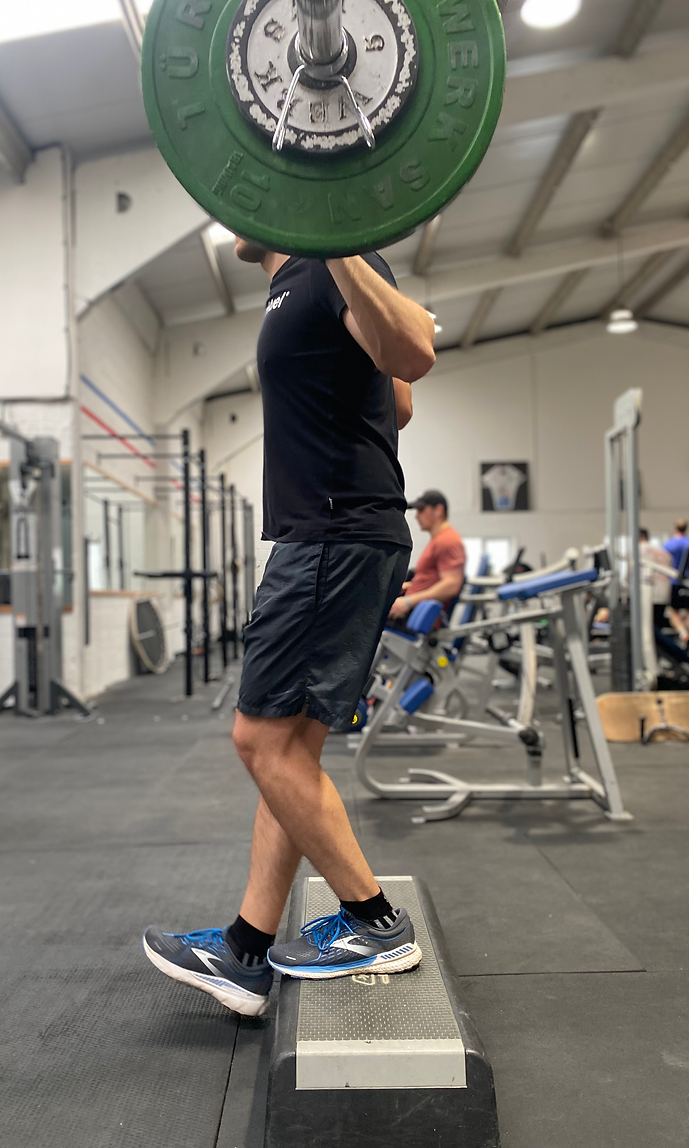
PHASE 3 — RESTORING ATHLETIC MOVEMENT
Graded exposure to running, plyometrics and dynamic movement
As strength and movement control improve, rehabilitation progresses towards restoring the athletic movement patterns required for sport.
This phase marks the transition from traditional rehabilitation exercises towards more dynamic, athletic training. However, introducing higher impact activities such as running and jumping must be done carefully and progressively.
At Proview Sports Injury Clinic, this stage follows a structured, criteria-based progression, ensuring athletes are exposed to increasing levels of load in a controlled and safe manner.
Rather than rushing back into sport-specific activities, athletes progress through graded exposure to impact and movement demands, allowing the knee, muscles and nervous system to gradually adapt.
Why Graded Exposure Is Essential
Running, jumping and rapid changes of direction place significantly greater loads on the knee compared to earlier rehabilitation stages.
If these activities are introduced too quickly, the knee may not yet have the strength, movement control or load tolerance required to manage these forces.
This can lead to:
• swelling flare-ups
• loss of confidence in the knee
• delayed rehabilitation progress
Graded exposure ensures that impact forces are introduced gradually and progressed systematically, allowing the body to adapt safely as rehabilitation advances.
Key Goals During Phase 3
• restoring strength symmetry between limbs
• improving landing and deceleration mechanics
• building tolerance to impact loading
• developing trunk and pelvic stability during athletic movement
• preparing the athlete for running and higher-level plyometric work
Athletes are typically working towards 90% limb symmetry or greater before progressing to more demanding sport preparation phases.
Structured Return-to-Running Progressions
Running is typically introduced during this phase through a graded return-to-running protocol.
Rather than immediately returning to continuous running, athletes progress through controlled stages that may include:
• walk–run intervals
• gradual increases in running duration
• controlled increases in running speed
• monitoring knee response to training loads
This structured progression helps ensure the knee is tolerating impact loads while continuing to develop strength and endurance.
Plyometric Progressions
Plyometric exercises are introduced gradually to develop the ability to produce and absorb force during athletic movement.
Plyometric progressions may include:
• controlled jump and landing drills
• low to moderate amplitude plyometrics
• forward and lateral jumping exercises
• single-leg landing drills
During this stage, the focus is not simply on jumping higher or further, but on developing efficient landing mechanics and force absorption strategies.
Movement Mechanics & Injury Risk Reduction
Many ACL injuries occur due to poor movement mechanics during tasks such as landing, deceleration or cutting. During this phase, rehabilitation focuses on refining the movement patterns required to safely perform these tasks.
Key movement qualities developed during this stage include:
• controlled knee alignment during landing
• strong hip and pelvic control
• effective deceleration mechanics
• symmetrical loading between limbs
Developing these movement strategies helps reduce reinjury risk and prepares athletes for the higher demands of sport.
Force Plate Movement Analysis
At Proview Sports Injury Clinic, we utilise force plate analysis to assess how athletes produce and absorb force during dynamic movements such as jumping and landing.
Force plate testing allows us to measure:
• limb symmetry during jumps
• force production during take-off
• force absorption during landing
• movement strategy between limbs
This data helps guide rehabilitation progressions and identify any asymmetries or movement strategies that may increase reinjury risk.
Preparing for Sport-Specific Training
By the end of Phase 3, athletes should demonstrate:
• strong and symmetrical lower limb strength
• good control during landing and jumping tasks
• tolerance to graded running loads
• improved confidence in dynamic movement
These qualities prepare the athlete for the final stage of rehabilitation where agility, cutting, reactive drills and sport-specific movement patterns are introduced.
PHASE 4 — RETURN TO SPORT PREPARATION
Developing agility, speed and sport-specific movement
Once athletes have demonstrated sufficient strength, movement control and tolerance to running and plyometric training, rehabilitation progresses into the return-to-sport preparation phase.
At this stage, rehabilitation begins to closely resemble the physical demands of sport. Athletes start to reintroduce acceleration, deceleration, change of direction and reactive movement patterns that are commonly associated with ACL injury mechanisms.
The goal of this phase is to ensure athletes are not only physically stronger, but also prepared for the speed, unpredictability and movement complexity of sport.
Why Sport Preparation Is Critical
Many ACL injuries occur during high-speed sporting movements such as:
• cutting and pivoting
• rapid deceleration
• landing during reactive play
• sudden changes of direction
Even when strength and running capacity have been restored, athletes must develop the ability to control these movements safely under increasing speed and complexity.
This phase focuses on rebuilding the movement qualities and physical capacity required to tolerate the demands of sport.
Key Goals During Phase 4
• developing safe change-of-direction mechanics
• improving acceleration and deceleration control
• increasing tolerance to reactive movement tasks
• restoring confidence during high-speed athletic movement
• preparing the athlete for reintegration into team training
By this stage, athletes should demonstrate high levels of strength symmetry, good movement mechanics and strong control during dynamic tasks before progressing towards unrestricted sporting activity.
Agility & Change of Direction Training
Athletes begin progressively introducing more complex movement patterns that replicate the demands of sport.
These may include:
• acceleration and sprint drills
• planned change-of-direction exercises
• cutting and pivoting drills
• deceleration control drills
• lateral movement progressions
Progression typically begins with planned movement patterns, before gradually introducing more reactive and unpredictable drills.
Reactive Movement & Decision Making
Sport rarely involves pre-planned movement. Athletes must react quickly to opponents, teammates and the ball.
During this phase, rehabilitation may introduce drills that require athletes to:
• respond to visual or verbal cues
• change direction unpredictably
• accelerate or decelerate under time pressure
These exercises help restore the coordination, reaction speed and movement control required during competitive sport.
On-Field Rehabilitation & Guided Return to Training
As athletes progress through this stage, rehabilitation begins to extend beyond the clinic or gym environment.
At Proview Sports Injury Clinic, we support this stage through on-field rehabilitation sessions, allowing athletes to begin performing sport-specific movement patterns in the environment they ultimately compete in.
These sessions may involve:
• acceleration and sprint progressions
• change-of-direction drills in a field setting
• controlled sport-specific movement patterns
• progressive exposure to training intensity
Where appropriate, athletes may also begin gradual reintegration into modified team training, allowing them to rebuild confidence in a sporting environment while continuing structured rehabilitation.
Returning to the training environment alongside teammates can also provide important social reinforcement, helping athletes reconnect with their team after extended time away from sport.
Return-to-Sport Performance Testing
Before progressing towards full sporting participation, athletes must demonstrate appropriate strength, movement quality and limb symmetry. At Proview Sports Injury Clinic, we utilise objective testing methods to assess readiness for sport.
Our return-to-sport testing may include:
• force plate jump testing
• strength profiling using force frame testing
• movement analysis during dynamic tasks
• limb symmetry assessment
These tests help ensure athletes are not only feeling confident but are also physically prepared to tolerate the demands of sport.


PHASE 5 — RETURN TO SPORT & CONTINUED ATHLETIC DEVELOPMENT
Building a stronger and more resilient athlete
Returning to sport marks an important milestone in ACL rehabilitation, but it does not signal the end of the rehabilitation journey.
The most successful ACL rehabilitation programmes focus not only on returning athletes to sport, but on ensuring they continue to develop the physical qualities that support long-term performance and knee health.
Throughout rehabilitation, athletes develop new strength, movement and training habits designed to improve how their body tolerates the demands of sport. Phase 5 focuses on continuing these principles after returning to sport, helping athletes build resilience and maintain the progress made during rehabilitation.
Applying the Principles Learned During Rehabilitation
Over the course of ACL rehabilitation, athletes learn how to train and move in ways that reduce unnecessary stress on the knee and improve overall athletic performance.
These principles often include:
• structured lower limb strength training
• controlled plyometric development
• effective landing and deceleration mechanics
• balanced loading between limbs
• good movement control through the hip and pelvis
Continuing to apply these principles within regular training helps ensure athletes maintain the strength and movement quality developed throughout rehabilitation.
Maintaining Strength and Symmetry
One of the most important lessons from ACL rehabilitation is the importance of maintaining lower limb strength and symmetry.
Athletes are encouraged to continue incorporating structured strength training into their ongoing training programmes to ensure that:
• quadriceps strength remains high
• hamstring and glute strength support knee stability
• strength symmetry between limbs is maintained
Maintaining these qualities helps athletes tolerate the physical demands of sport while supporting ongoing performance development.
Continuing Plyometric & Athletic Development
Plyometric training and athletic movement development are also important components of long-term ACL rehabilitation.
Continuing to train these qualities helps athletes maintain:
• efficient landing mechanics
• strong force absorption during deceleration
• explosive power during sprinting and jumping
• confidence performing high-speed sporting actions
These elements are essential not only for injury prevention but also for maximising athletic performance.
Ongoing Monitoring & Performance Profiling
At Proview Sports Injury Clinic, many athletes continue to monitor their progress even after returning to sport.
Using objective testing methods such as:
• force plate testing
• strength profiling using force frame assessments
we can continue tracking important performance markers including:
• limb symmetry
• force production
• movement mechanics
This allows training programmes to be adjusted where necessary and helps ensure athletes continue progressing after rehabilitation.
Returning Stronger Than Before Injury
One of the key goals of modern ACL rehabilitation is not simply to return an athlete to their previous level of function.
Instead, the aim is to help athletes return stronger, more resilient and better prepared for the demands of sport than they were before injury.
By continuing to apply the strength, movement and training principles developed throughout rehabilitation, athletes can maintain the progress they have achieved and continue building athletic capacity long after returning to sport.
CHECK OUT OUR TESTIMONIALS FOR INSIGHTS OF ATHLETES RETURNING TO SPORT
SUPPORTING ACL REHABILITATION WITH SPORTS THERAPY
Alongside structured rehabilitation, sports therapy can play an important role in supporting recovery following ACL injury or reconstruction.
During early rehabilitation, muscle stiffness, swelling and reduced movement around the knee can limit range of motion and affect confidence when loading the leg. Sports therapy can help support early mobility, tissue quality and load tolerance as rehabilitation progresses.
Sports therapy treatments may include:
• targeted soft tissue therapy to the quadriceps, hamstrings and calves
• sports massage to reduce muscular tension around the knee
• mobility work to support restoration of knee range of motion
• treatment of muscle adhesions that can develop during periods of reduced activity
These treatments are commonly used to support load management during rehabilitation, particularly during early-stage recovery or following surgery.
Athletes also often experience muscular discomfort around the knee during rehabilitation. Addressing these surrounding tissues can help restore comfort and reassure athletes that symptoms are often muscular rather than related to the ACL itself.
Sports therapy can also support recovery between sessions as training loads increase during later stages of rehabilitation.


ONLINE ACL REHABILITATION SUPPORT
ACL rehabilitation requires structured guidance, progression and expert oversight throughout each stage of recovery. While many athletes attend in-clinic sessions, our ACL rehabilitation expertise is also available remotely, allowing athletes to access the same specialist support from anywhere in the world.
Through our online and hybrid rehabilitation services, athletes can receive a fully individualised rehabilitation programme designed around the same principles outlined throughout this page.
This allows athletes to benefit from:
• structured ACL rehabilitation programming
• expert guidance through each phase of recovery
• regular programme updates as rehabilitation progresses
• ongoing communication with a specialist clinician
• support managing training load and rehabilitation progression
Whether you are recovering from surgery, progressing through later stages of rehabilitation, or returning to sport, our online support ensures you can access the same high standard of ACL rehabilitation guidance regardless of location.
Many athletes combine online support with occasional in-clinic sessions, creating a hybrid rehabilitation model that provides both hands-on care and ongoing remote guidance throughout recovery.
ACL Rehabilitation FAQ
How long does ACL rehabilitation take?
ACL rehabilitation typically takes 9–12 months before athletes return to full competitive sport. Progression is guided by strength testing, movement assessment and functional performance, rather than simply time since surgery.
When can you start running after ACL surgery?
Running is usually introduced around 3–4 months after ACL reconstruction, once athletes demonstrate sufficient strength, knee control and tolerance to impact loading. A structured return-to-running programme is used to gradually increase running volume and intensity.
Why is quadriceps strength important after ACL reconstruction?
The quadriceps muscle plays a key role in stabilising the knee. After ACL surgery it often becomes weak or inhibited, so restoring quadriceps strength is one of the most important priorities during rehabilitation.
When can athletes return to sport after ACL reconstruction?
Most athletes return to sport between 9 and 12 months after surgery, depending on rehabilitation progress and sport demands. Athletes should demonstrate strong lower-limb strength, good movement mechanics and symmetrical force production before returning.
Can ACL rehabilitation be done online?
Yes. Many athletes complete parts of their rehabilitation through online or hybrid programmes, allowing them to receive structured guidance, programme updates and specialist support regardless of location.
Can athletes return stronger after ACL reconstruction?
Yes. Modern ACL rehabilitation focuses on rebuilding strength, improving movement mechanics and developing better training habits so athletes can return stronger and more resilient than before injury.
Do you work with youth athletes recovering from ACL injuries?
Yes. We regularly support youth and academy athletes recovering from ACL injuries or reconstruction. Rehabilitation considers growth, maturation and training load to safely rebuild strength, movement mechanics and confidence before returning to sport.
